
How much electricity will solar panels generate?
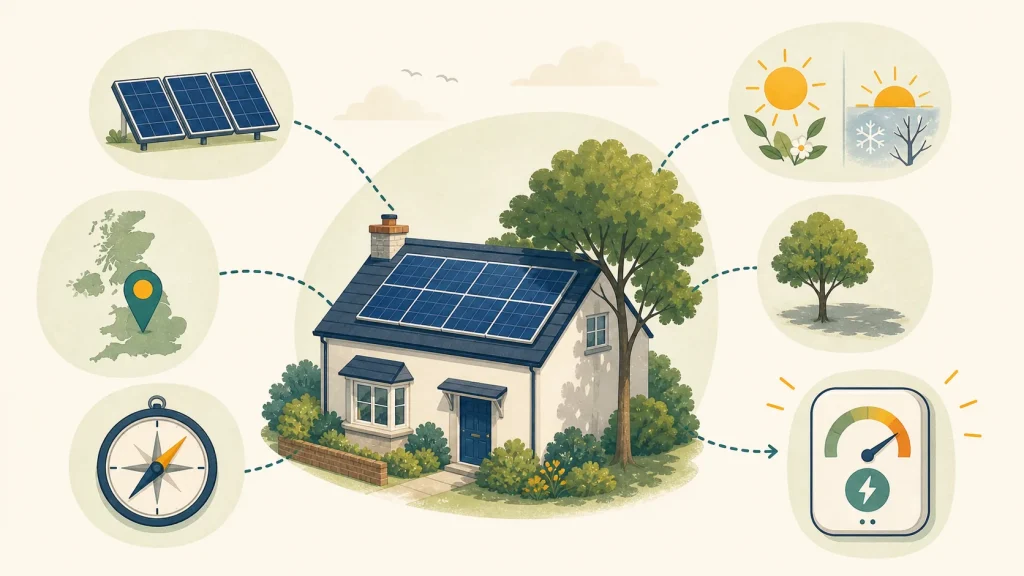
Solar panels generate different amounts of electricity depending on their size, where you live and the direction and shade on your roof. Your quote should estimate what your own system could produce.
Understand the two main figures
kWp describes the size of the system. It is the combined rated power of the panels under standard test conditions.
kWh measures the electricity produced. Your quote should show an estimated number of kWh per year. This is the same unit used on your electricity bill.
A 4 kWp system does not produce 4 kW all the time. Its output changes with daylight, weather and the seasons.
Compare the output estimates in your quotes
Divide the forecast annual generation by the system size. This gives the quote’s yield in kWh per kWp and makes two similar designs easier to compare.
The estimate works out at kWh per kWp.
Different roofs can give different results. Ask the installer to explain any large difference between quotes.
Ask for a monthly breakdown as well as a yearly total. Summer and winter output will be very different.
What changes the amount generated?
- Location and daylight: generation varies around the UK and across the seasons.
- Roof direction and slope: these affect when and how much sunlight reaches the panels.
- Shade: trees, chimneys and nearby buildings can reduce output.
- The equipment: some electricity is lost through the inverter and cables, and the system may have a limit on power sent to the grid.
Ask for an estimate based on your roof
Your installer should explain the roof details and shading used in the calculation. A postcode-based tool such as PVGIS can offer another estimate, but cannot inspect the roof or see every obstruction.
Electricity generated is not the same as money saved
You save on your bill when you use solar electricity instead of buying it. Spare electricity may go into a battery or earn an export payment. This is why the time of day you use electricity matters.
Use the savings calculator to explore the figures from your quote.
Questions to ask your installer
- How much electricity do you expect the system to produce each year and each month?
- How did you allow for the direction, slope and shade on my roof?
- Did you check the shade during the survey?
- Are equipment losses and any output limits included?
- Why is your estimate different from another quote I have received?
If an existing system is producing less than usual, see our fault and repair guide.