Start with your electricity use
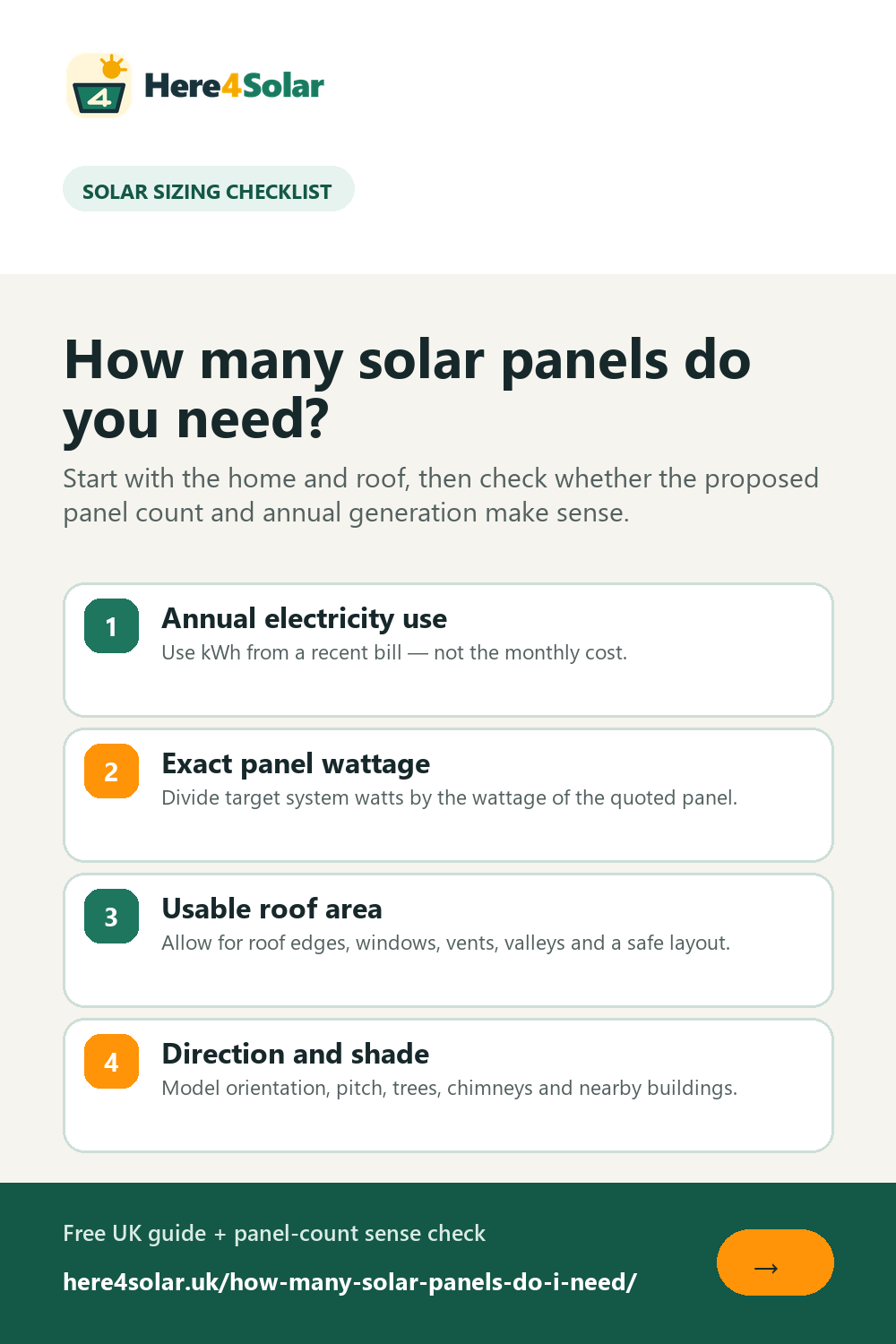
Find your yearly electricity use on a bill. It is shown in kWh: the units of electricity you buy. This is more useful than your monthly payment, which depends on prices as well as use.
Tell the installer when you use most electricity. Are people at home in the day? Do you mainly use power in the evening? Include plans for an electric car, a heat pump or more home working.
You do not need to know every answer before asking for advice. Take the bill and explain what you expect to change.
Check what your roof can support
An installer should check the roof’s condition, size and shade. Panels need room around roof edges, windows, chimneys and other obstacles. Ask for a drawing that shows the exact panels and where each will fit.
A roof facing south often makes the most electricity over the year. East- and west-facing panels can still be useful. Their output is spread at different times of day. Heavy shade or a north-facing roof needs careful advice before you spend.
If the roof needs repairs, discuss these first. Do not climb onto the roof to measure it yourself.
What does the panel rating mean?
Each panel has a power rating in watts, shown as W. Add the ratings and divide by 1,000 to find the system size in kWp. This describes the panels under test conditions; it is not their constant output.
A simple example
Nine panels rated at 450 W give 4,050 W in total. That is a 4.05 kWp system. A different panel model may need a different number of panels for a similar system size.
Check the yearly electricity estimate as well as the kWp figure. A larger system on a shaded roof may not perform as you expect.
Ask how much electricity you could use
Your quote should estimate the electricity made each year in kWh. Ask for a monthly breakdown too. Panels usually make much more in summer than in winter.
Some electricity can be used straight away. Spare electricity may go to a battery or the grid. Ask the installer how much you could use at home and how they reached that figure.
Then ask for the same panel layout priced with and without a battery. Choose the battery around your needs, rather than choosing the panel count around a battery offer.
Check permission and ownership early
If you rent or own a leasehold home, ask the landlord or freeholder what permission is needed. Listed buildings, flats and protected areas need extra checks. Planning rules differ across the UK.
The installer should explain who handles planning checks and the local electricity-network paperwork. Use our planning guide before agreeing to the final design.
Take these details to the survey
- Your yearly electricity use and when people are usually at home.
- Any known roof damage, leaks or heavy shade.
- Plans for more electricity use in future.
- Your budget and whether you want a separate battery price.
- Any lease, listing or permission issue the installer needs to know about.
Check the output in your quote
See and share the panel-size checklist
Usage note: You may use this image if you credit and link to this page. Suggested attribution: Here4Solar.uk - https://here4solar.uk/how-many-solar-panels-do-i-need/How many solar panels do I need - UK sizing checklist