
What does 0% VAT mean for your quote?
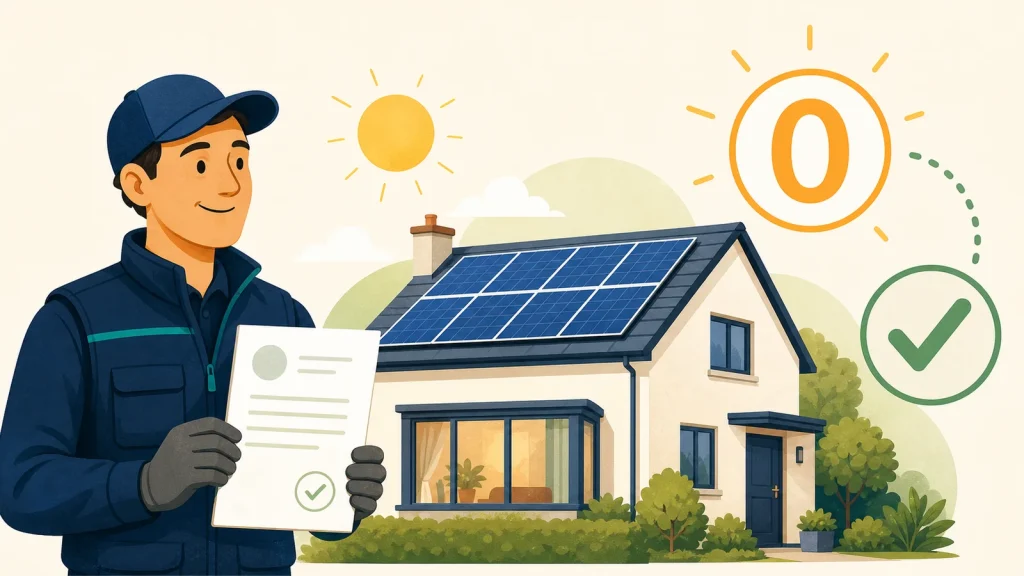
VAT is a tax included in many prices. A 0% rate means no VAT is added to work that meets the rules. It does not make the panels free or pay for the labour.
Ask for a total price that includes all tax. The quote should show which work uses which VAT rate. Keep that detail on the final invoice too.
Which type of purchase are you making?
A firm supplies and fits the panels
A home installation that meets the rules normally gets 0% VAT during the relief period. This can include the panels, inverter, cables and controls needed to make the system work. An inverter changes the electricity from the panels into a form your home can use.
You buy parts on their own
A shop selling panels or parts without fitting them normally charges the standard VAT rate. If a different firm later fits them, that fitting work may qualify for relief. It does not change the tax already paid to the shop.
You are having a battery fitted
Installed home batteries can also qualify for the temporary 0% rate. This includes a battery fitted with panels, added to an older system or used to store electricity from the grid.
Check that the price includes fitting and that the work meets the rules. See our battery cost and savings guide before comparing offers.
What if the job includes other work?
A quote may include roof repairs, building work or other extras. Some work needed for the solar installation can follow its VAT treatment. Separate or unrelated work may use a different rate.
Ask for each part of the job to be priced clearly. The tax treatment depends on the work and how it is supplied. A mixed job needs more than a blanket “all at 0%” claim.
Repairs and routine maintenance do not automatically get the same relief as a new system. Ask the repair firm to explain the rate on its quote.
What happens after March 2027?
Under the current rules, the rate for qualifying installations returns to 5% from 1 April 2027. Ask the installer which rate applies to your payments and work. Paying a deposit does not by itself answer that question.
Check what the contract says if work is delayed or the tax rate changes. Do not rush a decision just to meet a date.
What if your quote shows 20%?
Ask the firm why it used that rate. Buying parts without fitting is one reason the standard rate may apply. If the job qualifies for a lower rate, ask for a corrected quote or invoice.
For an unusual or mixed job, ask a qualified tax adviser if the answer is unclear. HMRC’s notice gives the detailed rules.
Your invoice checklist
- Does the total include all VAT?
- Which parts of the job meet the relief rules?
- Are the battery, roof repairs and other extras shown clearly?
- Does the invoice match the work and tax rates agreed?
- What happens if the work or payment dates change?
If the offer also includes funding, use our grant-offer checklist. A grant, a loan and a lower tax rate are different forms of help.
HMRC VAT Notice 708/6 checked 29 October 2026. This guide gives general information about home installations.